Login with your member password below to see your content
Why not become a Supporter?
Click the more info button to see what we offer...
Chioggia- A Mini Venice
💡Skip roaming fees with a Saily eSIM. Use coupon code italymammamia10 & get 10% off.
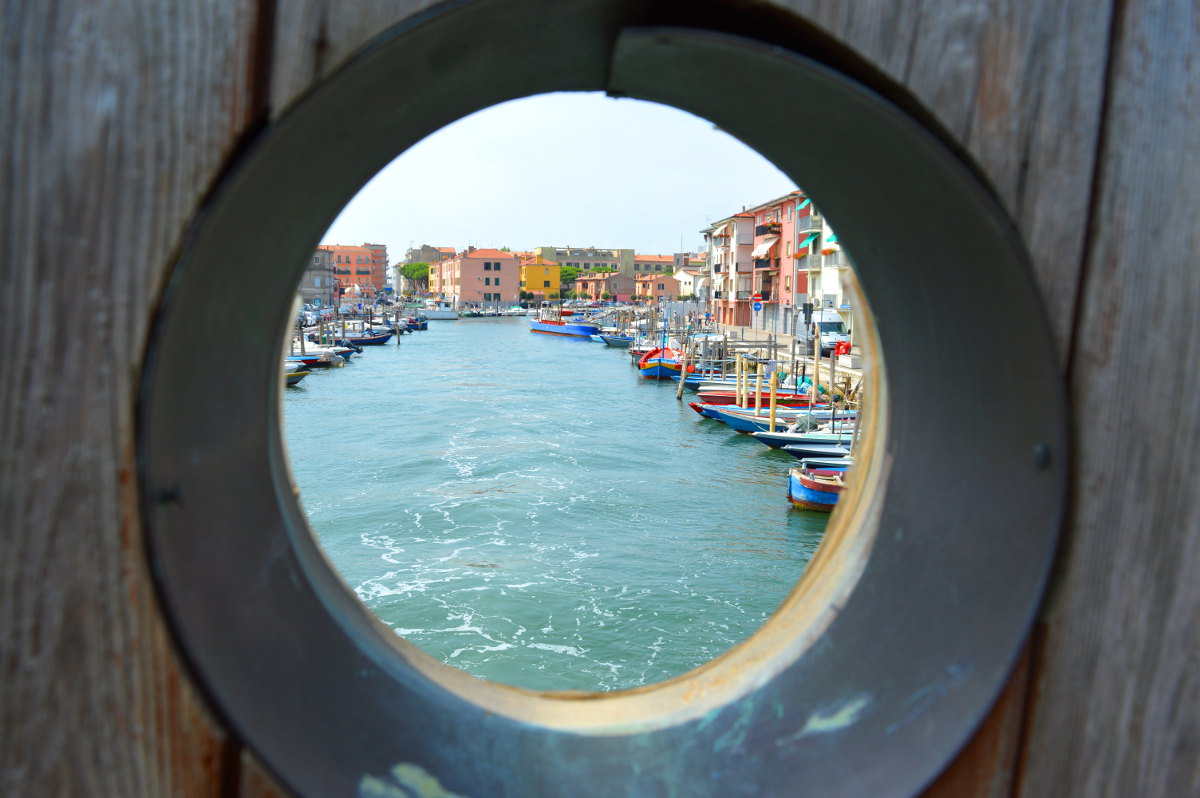
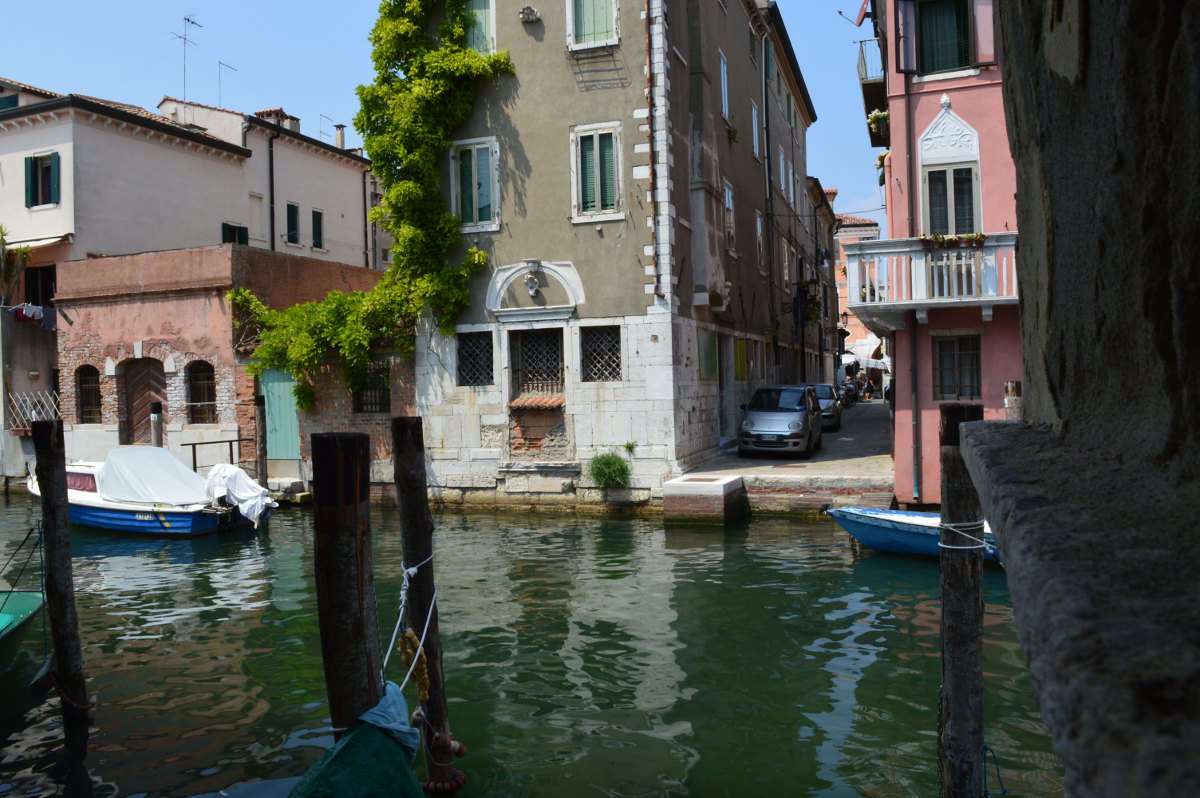
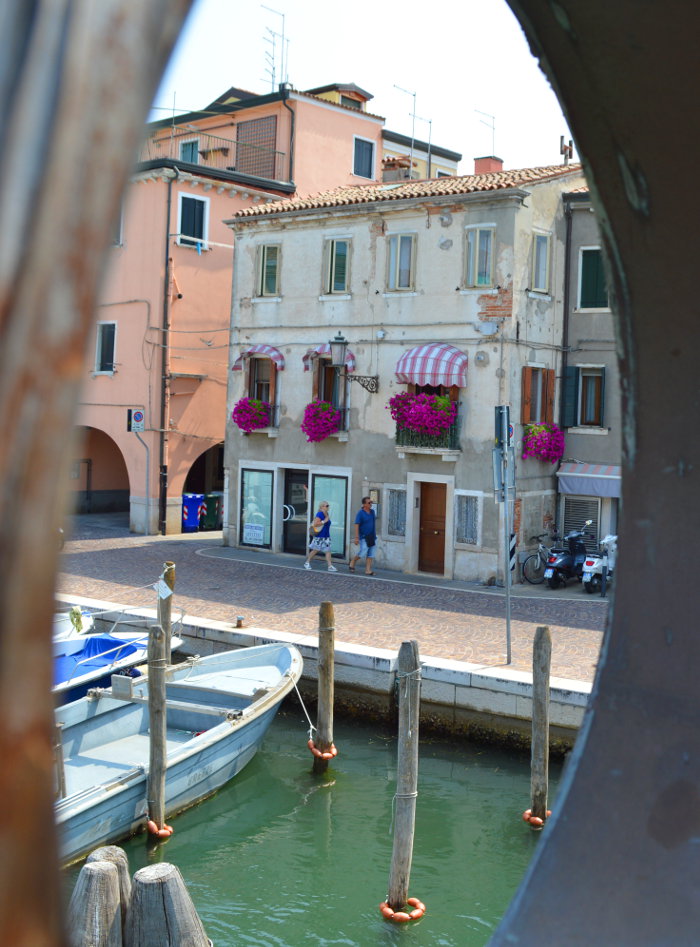
If the crowds of Venice are not really for you, then escape to Chioggia. Here you'll find a miniature version of Venice, minus all the tacky tourist stores, huge numbers of tourists, and inflated prices.
Okay, there's no St. Mark's Square or Rialto Bridge, and the fancy palaces are lacking. Don't let that worry you, though; Venice is only a 90-minute boat ride away; however, don't rush off to Venice just yet. The joy of Chioggia is experiencing life as it must have once been lived in Venice: here, the locals still outnumber tourists and are always friendly; children run freely around market squares; and small trattorie tempt with the aromas of the day's catch.
The one to try is La Taverna in Via Cavallotti 348, where the warm smiles of Nadia and her husband, Felice (the couple who own the restaurant), are soon followed by big smiles of your own as you bite into the incredibly fresh seafood dishes.
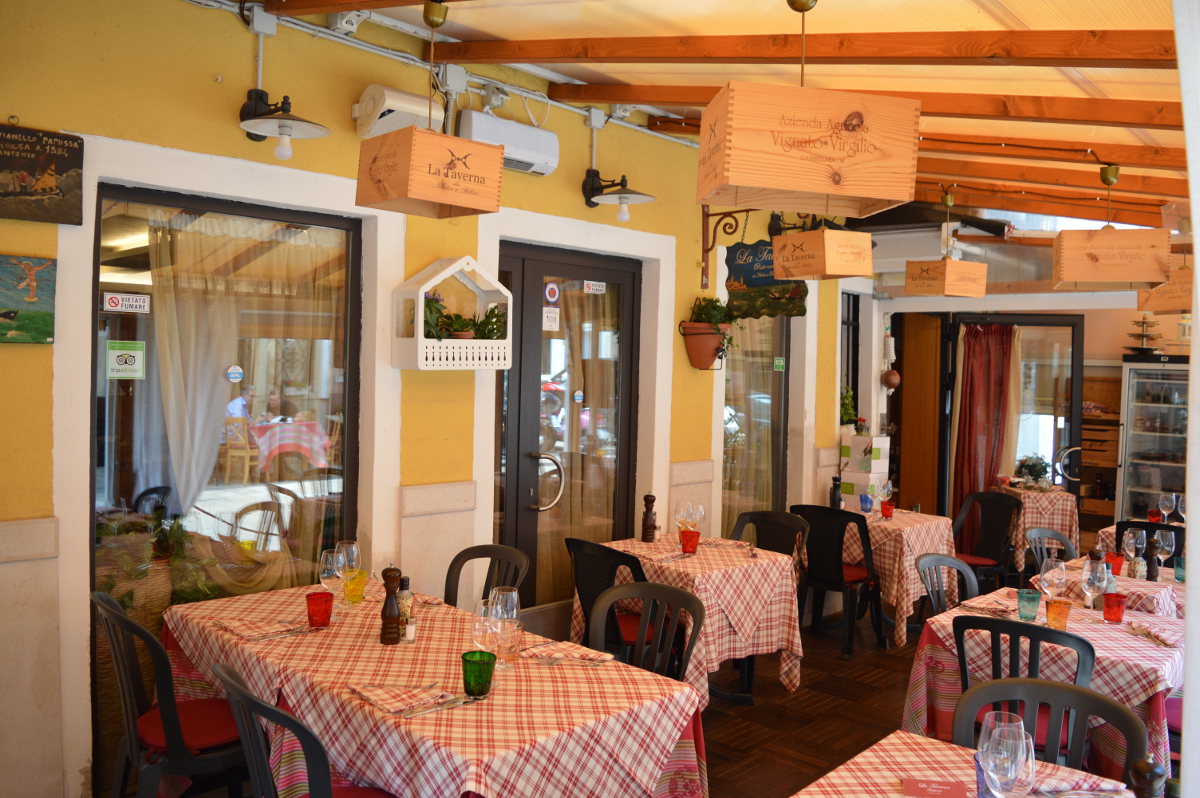 La Taverna Restaurant in Chioggia
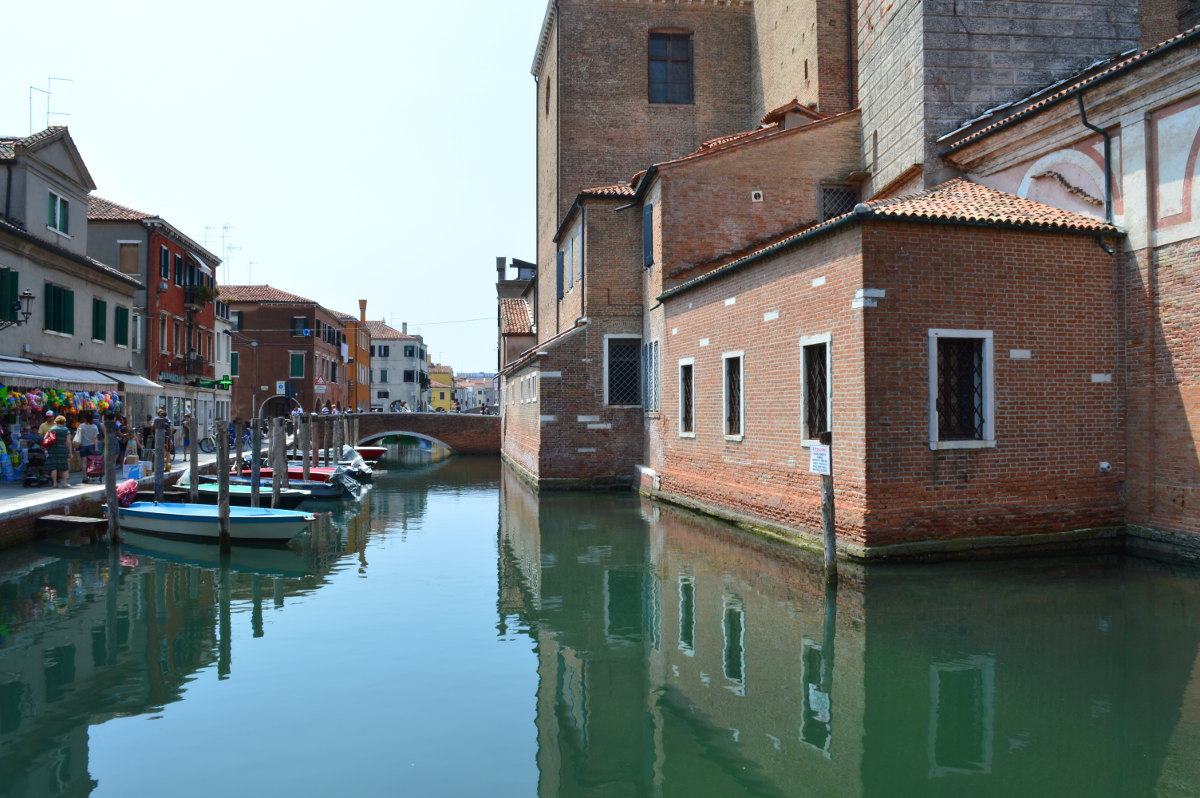
On each corner and every square, locals meet and gossip, while along the canals, fishermen discuss the one that got away. At the fish market, you'll see the ones who didn't get away, while housewives and local chefs haggle with the stallholders.
Our Tip: Have a look at the fish names in the market so you'll know what you're eating or ordering at lunch and dinner. You won't find many English-language tourist menus in this town.
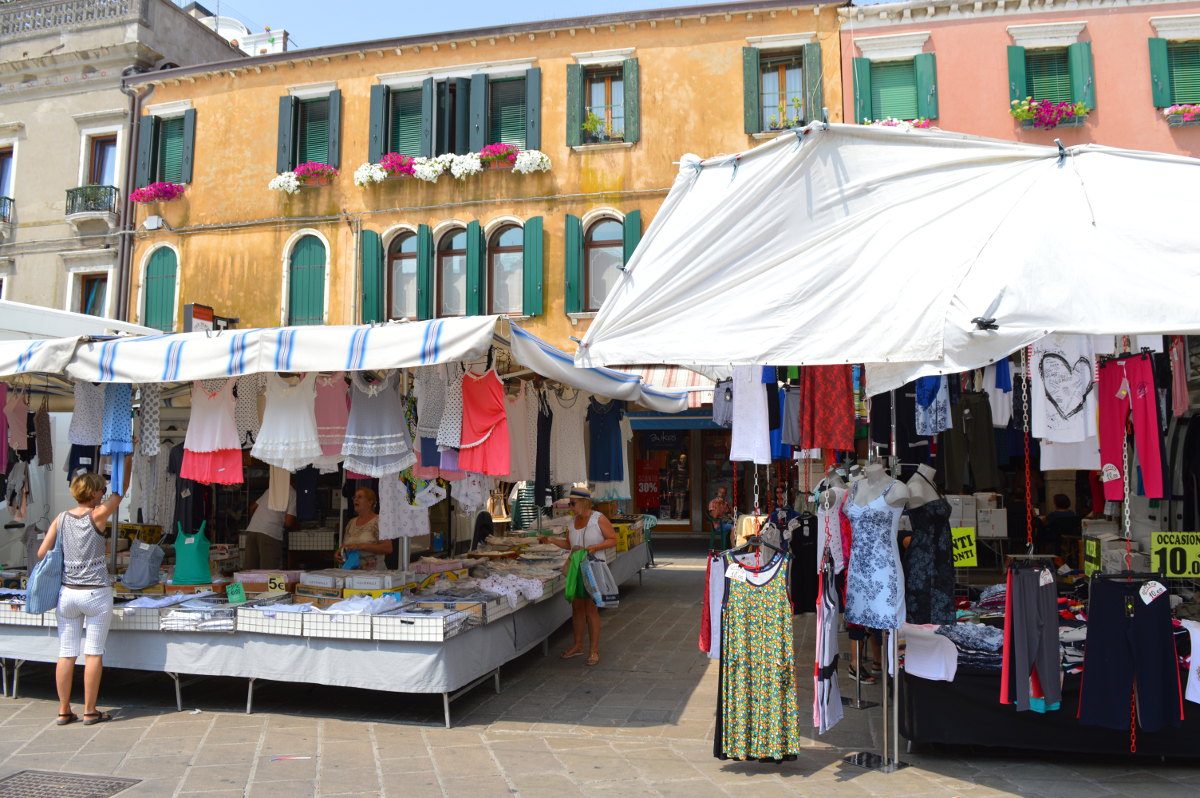
Market day, held every Thursday, is particularly bustling, and if you are anything like me, you'll love it.
Stall after stall is filled with incredible bargains: shoes, handbags, blouses, shirts, pots and pans, linen, etc., just about everything you can think of, and unlike in Venice, most of it is made in Italy. It's one of the biggest and best street markets in the entire Veneto region.
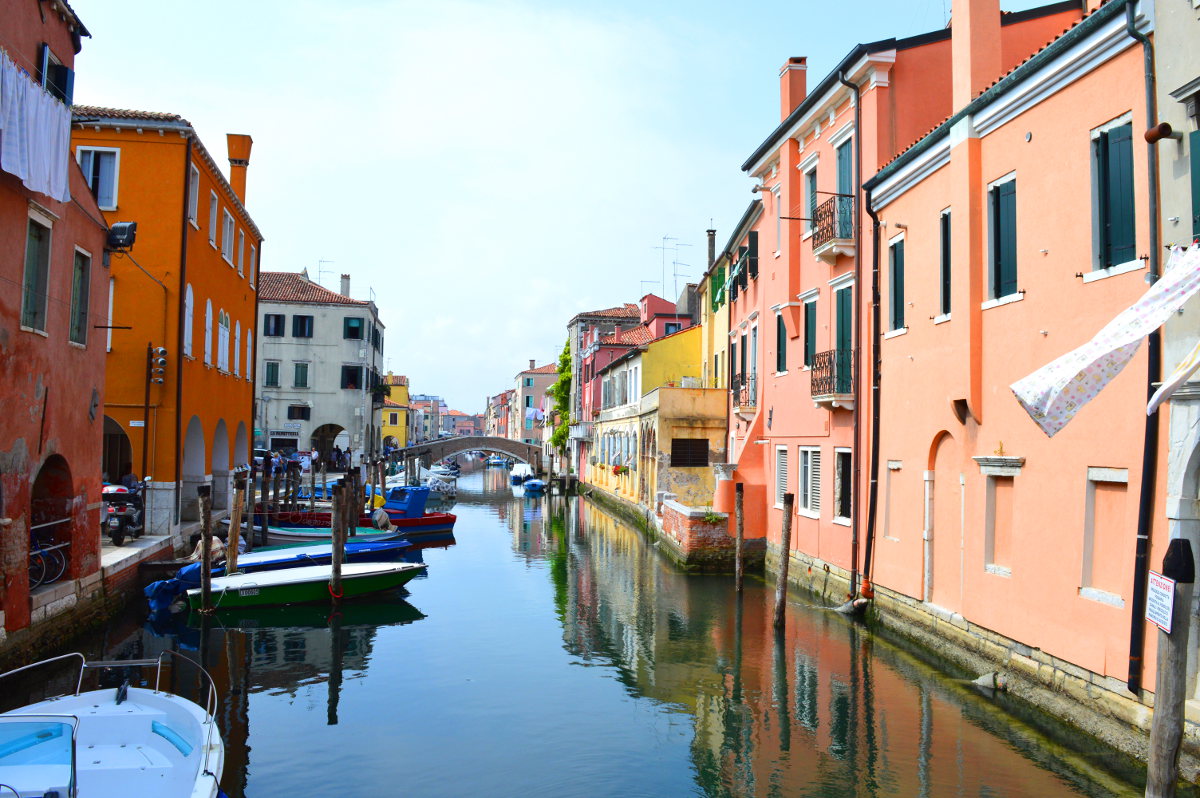
Chioggia's little bridges are similar to those of Venice, except that no one is selling selfie sticks or taking selfies on the bridge's side. Fake-bag sellers are also absent, as are tourists dragging luggage.
The main bridge, on the way into town, even has some lions on it—symbols of the old Venetian Kingdom. Venetians joke that they are so small that they look like cats.
What to See & Do
Sagra del Pesce
Try to visit during the Sagra del Pesce festival, held in mid-July. You'll find streets lined with tables, each and every one weighed down under huge plates of seafood. Live music gets people dancing while jugglers and clowns entertain.
I'll never forget the laughter, chatter, and the feeling of not wanting to be anywhere else on Earth, as well as the new friends I made on those warm summer evenings. I ate way too much seafood, had a glass or two more wine than I should have, and definitely talked way too much, which I always do anyway.
Churches
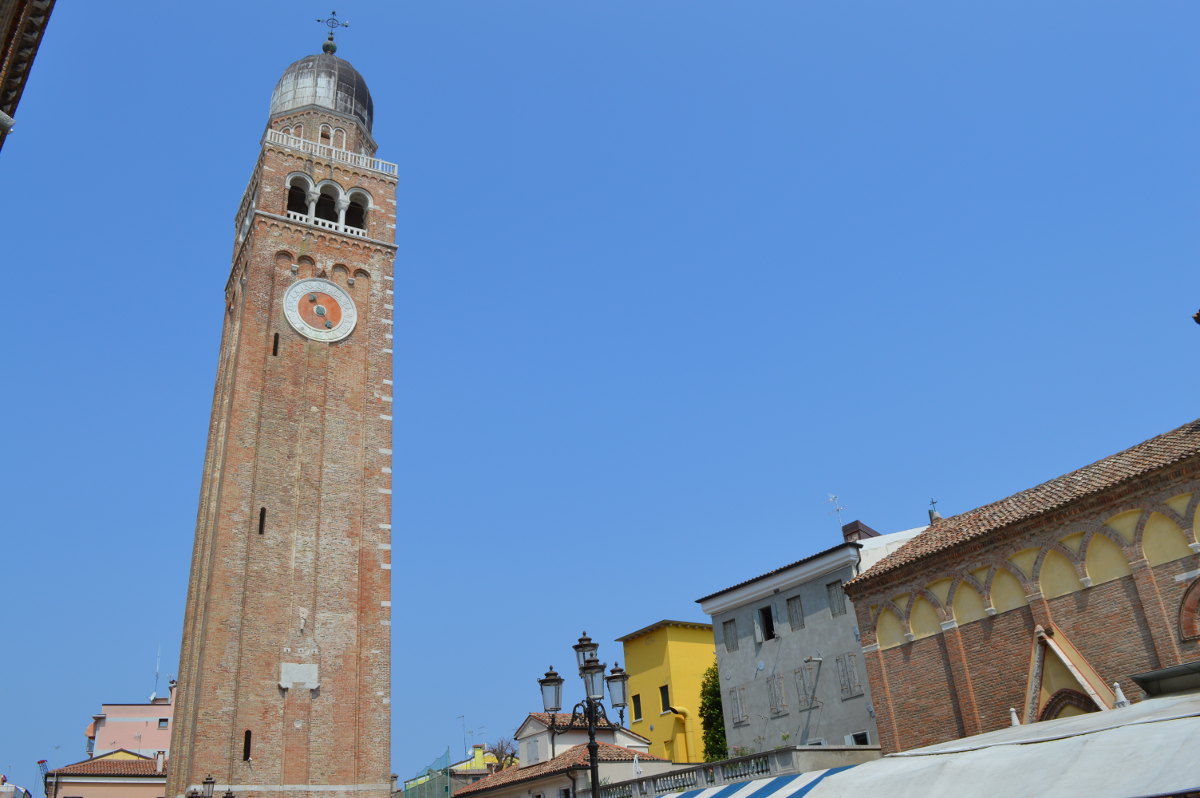
Venice has its cathedral and bell tower, and so too does Chioggia; there's even a clock tower, the Clock Tower of Sant' Andrea, which is the oldest in the world.
The cathedral called the Cathedral of Chioggia is definitely worth a visit, and the Sunday service is an experience to savor even if you aren't Catholic. Next door to the church is the 14th-century bell tower.
Drop by the Chiesa di San Domenico, which is built on its own small island and houses a famous Tintoretto painting as well as Vittorio Carpaccio's final work depicting Saint Paul.
Last, but not least, is the Basilica di San Giacomo Apostolo.
Museums
There's the "fish" museum, as the Museo di Zoologia Adriatico Giuseppe Olivi (Giuseppe Olivi Museum of Adriatic Zoology) is nicknamed by locals. The nickname kind of put me off, but don't let it stop you—it's actually a very interesting insight into the fish that live in the lagoon.
The other main museum is the Civic Museum, which I found rather boring.
A Beach?
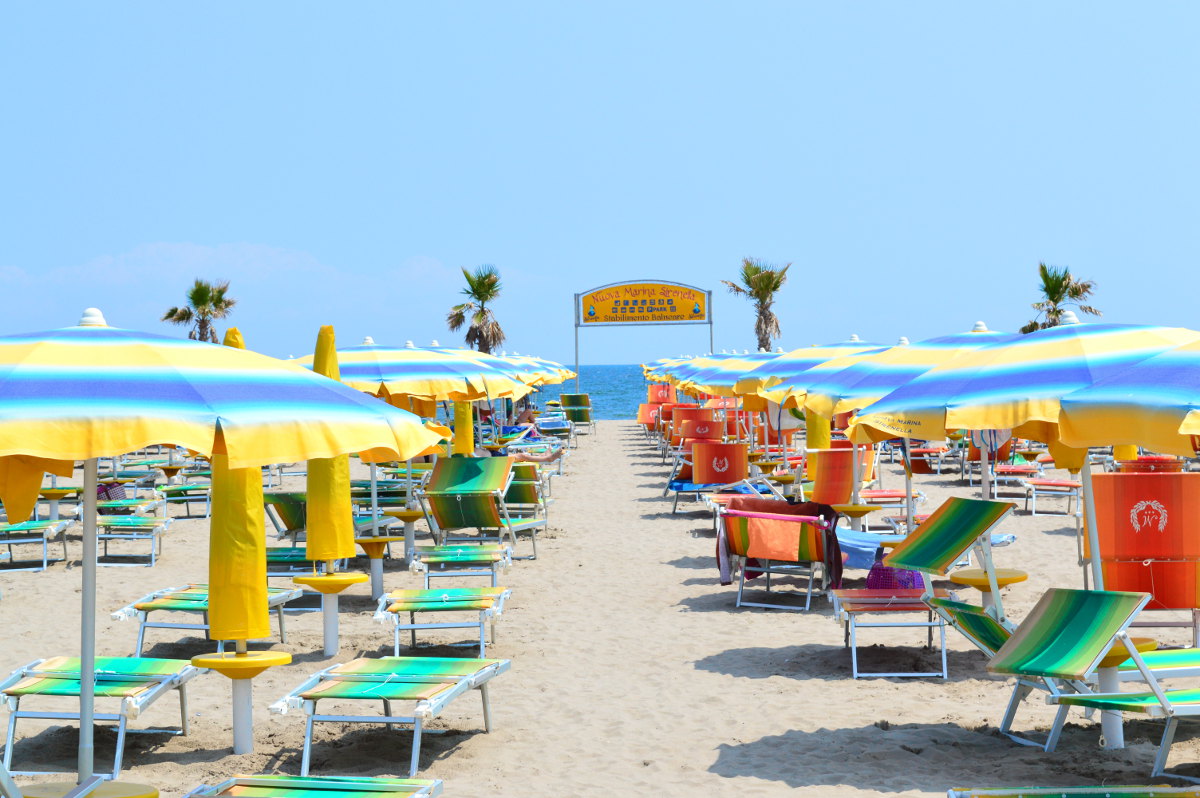
A lot of people always write to me asking where they can find a beach in Venice. After the heat and humidity of a sweltering Italian summer's day, a cooling dip in the Med can seem essential. In Venice, you've got to go some distance out of the city to find one. Not in Chioggia; just cross the bridge to neighboring Sottomarina, and you'll find a huge beach with warm, shallow waters and few waves—ideal for children.
Most of the beach is a pay beach, and in the summer, a lot of the spots are reserved months in advance by Italians who come here every year or by hotels that book whole sections for their guests.
So what do you do?
If enjoying time on the beach is something you'd like to do, then book a hotel in Sottomarina. Most of them are only a 15-minute walk to Chioggia, and you'll find our recommendation under the "Where to Stay" section below...
Where to Stay
For the beach and Chioggia option, the best place to stay is definitely the Smart Hotel Mediterraneo - a family-run hotel with a great restaurant serving local dishes. They also offer free bikes and the beach is right across the road, where a private section, consisting of two deckchairs and a beach umbrella, is reserved just for you.
In Chioggia itself, try the excellent B&B Antico Orologio, located right in the heart of the old town.
Where is Chioggia & Getting There?
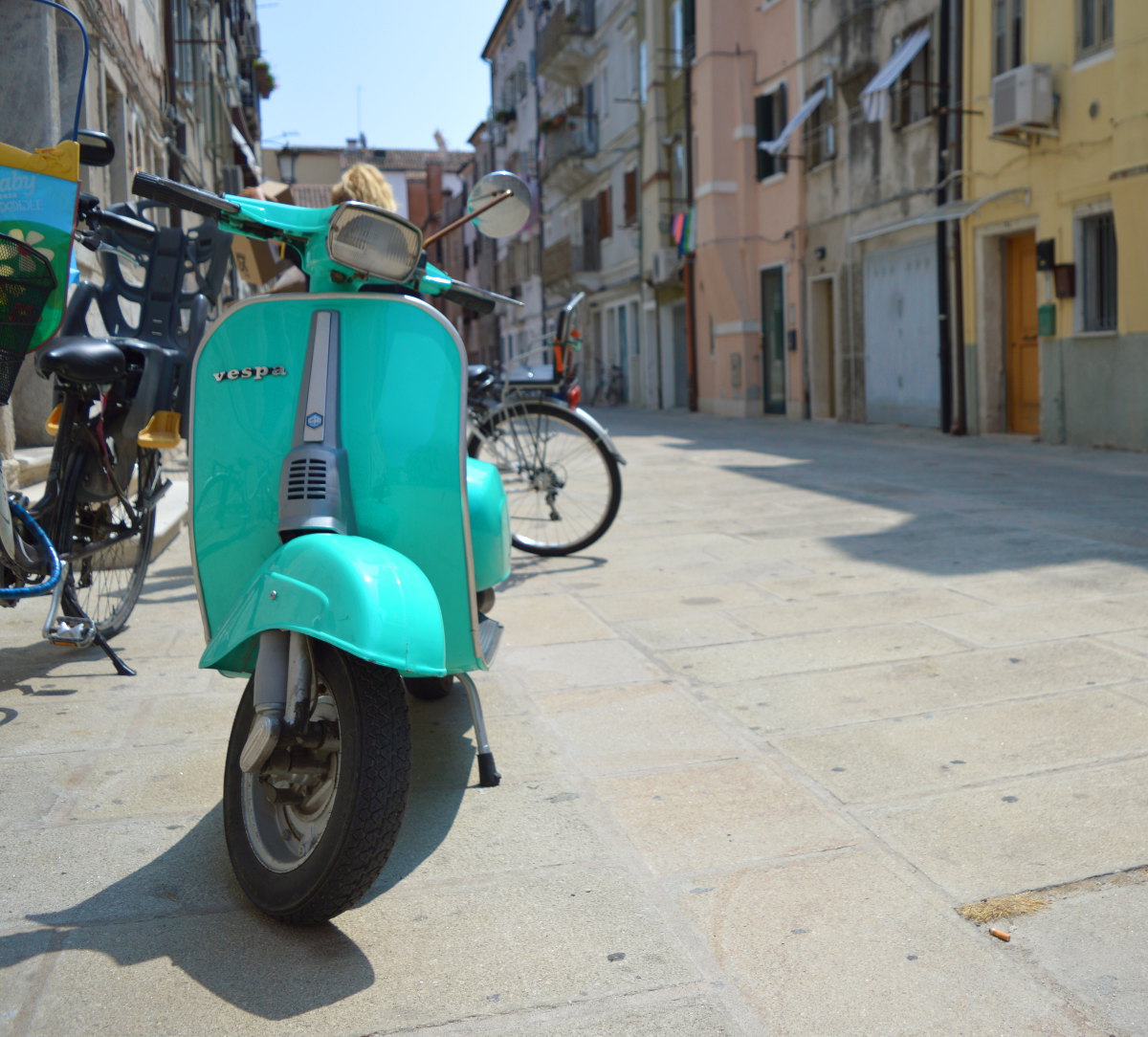
Chioggia is at the southern tip of the Venetian Lagoon, about 25 kilometres south of Venice. Reaching Chioggia is straightforward, whether you're coming from Venice, Padova, or driving through the Veneto countryside.
From Venice
The most direct option is to take a bus from Venice Mestre station (the mainland transport hub). Buses run regularly, with the journey taking about 50 minutes to an hour. It's a comfortable ride that gives you a glimpse of the lagoon landscape along the way. Check the local ACTV or Arriva schedules for current departure times, as they can vary by season.
From Padova
If you're based in Padova, buses depart from the main station every 30 minutes or so. The journey takes about an hour and is a simple, straightforward route.
By Car
Driving to Chioggia is easy, but there's an important detail to remember: you cannot drive into the historic center. Like many Italian towns, Chioggia has a dreaded ZTL (click for more about these). The ZTL restricts unauthorized vehicles from certain areas and can lead to huge fines if you inadvertently enter.
The sensible approach is to park on the edge of the old town—there are several car parks within easy walking distance—and then explore on foot.
Once you're there, a car is more of a hindrance than a help. The narrow streets and canal-side paths are best discovered by walking, and many hotels offer bicycles for guests to borrow or rent, which is a lovely way to soak up the atmosphere.
Map
You might like these
Cervo, Liguria: Where the Good Life meets the Quiet Life
Aah, the Italian Riviera! 5Terre, Portofino and sleepy Cervo: an ancient little ochre village backed by olive groves and overlooking the bluest of seas.
Montemerano - This is the Italy You Dreamed Of
Balconies, flower boxes, washing on lines, wall plants, pots; and intricate stone. Another garden village I wish I lived in. One gets wistful in Montemerano.
Serralunga d’Alba: eat, drink and unwind
Winding streets, a castle on the hill, and endless vines—Serralunga d’Alba captures everything we love about the Langhe. It’s a town to slow down and savour.
- HOME
- A Secret Italy Home Page
- Index
- Chioggia